
A grasping tail
It can grip branches with its tail. Its contrasting appearance inspires the name rabo de chucha, or opossum tail.
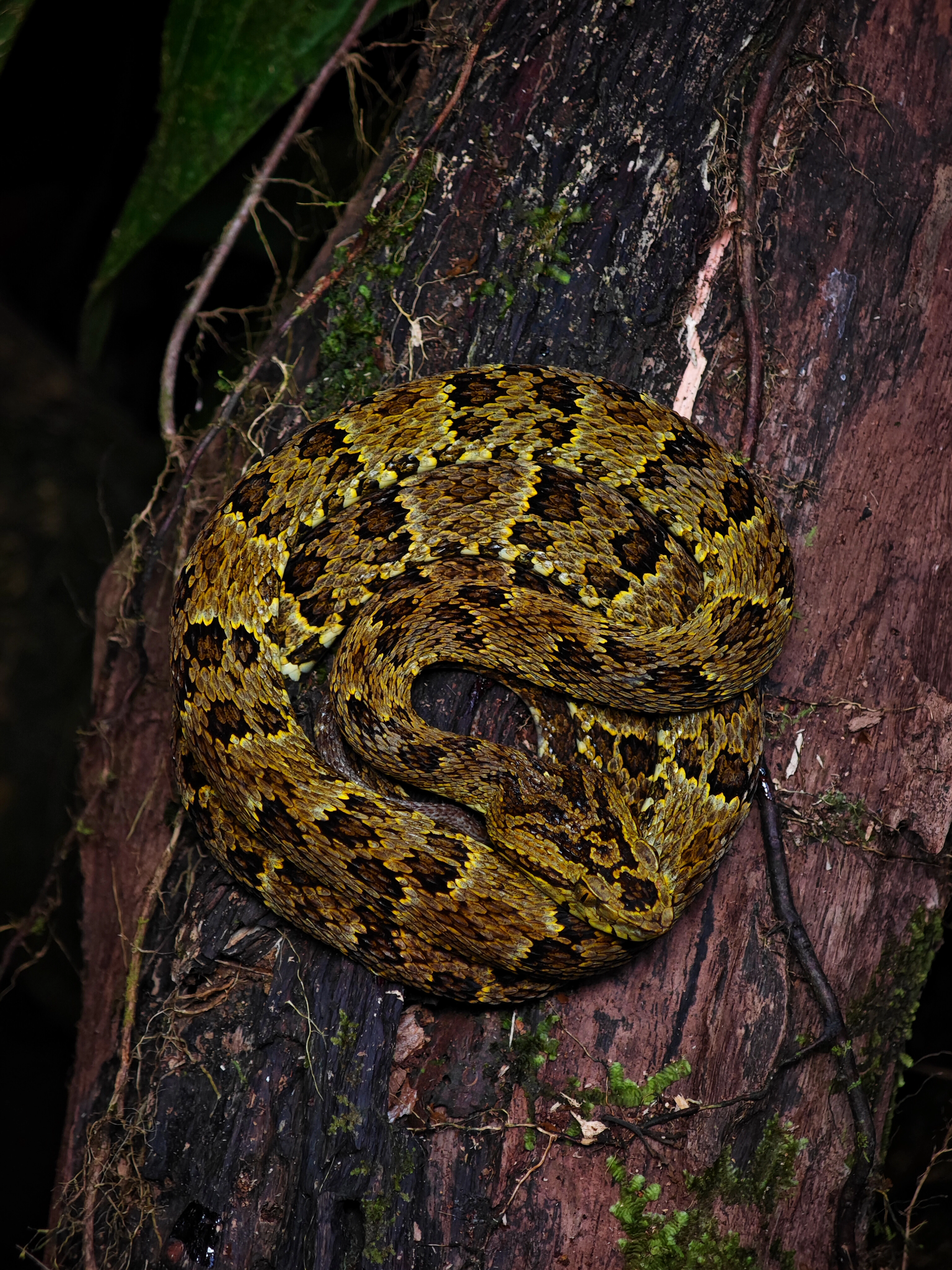
Chocoan Forest Pit Viper
It can grip branches with its tail. Its contrasting appearance inspires the name rabo de chucha, or opossum tail.
Juveniles can move their contrasting tail tip to draw prey within striking distance.
Pits between the eyes and nostrils detect infrared radiation and help locate prey.
Females give birth to live young: embryos develop inside the mother.
INS records in seven departments of western and Andean Colombia. Its international range runs from eastern Panama to northwestern Ecuador.